
Getting your Michigan driver’s license starts with one critical step: passing the Michigan permit test. Whether you’re a teenager eager to get behind the wheel or an adult new to driving, this comprehensive guide will walk you through everything you need to know about the knowledge test, from eligibility requirements to study strategies that actually work. Familiarizing yourself with vehicle safety regulations is essential for both preparation and practice.
The permit test is your gateway to supervised driving on Michigan roads, and with the right preparation, you can pass it on your first attempt. Let’s break down the entire process so you know exactly what to expect.
Quick Answers About the Michigan Permit Test

The Michigan permit test is a multiple-choice exam that measures your understanding of Michigan traffic laws, road signs, and safe driving practices. While many first-time test-takers worry about difficulty, the test is straightforward if you study the official materials—approximately half of all applicants pass on their first try. Knowing vehicle safety guidelines and regulations can give you an additional edge.
The standard Michigan learner’s permit test for teens consists of 50 multiple-choice questions, and you need a passing score of at least 40 correct answers (80%) to obtain your permit. Some applicants confuse this with the 60-question format sometimes used in practice materials, but the official beginner permit exam is 50 questions.
All questions come directly from the Michigan driver’s handbook titled “What Every Driver Must Know,” which covers road signs, traffic laws, right-of-way rules, and safe-driving strategies. The Secretary of State’s office administers this test either in person at a branch office or online for eligible adults aged 18 and older. Knowing that safety and regulations are key components will help you feel more prepared.
Before you can practice driving on public roads, you must pass this knowledge test. Here’s a quick overview of what to expect:
Number of questions: 50 multiple-choice
Passing score: 40 correct (80%)
Time allowed: No strict time limit, but must be completed in one sitting
Languages available: English and multiple foreign languages, with audio options and sign language interpreter services available upon request
Michigan GDL Overview and Types of Permits at the DMV
Michigan uses a Graduated Driver Licensing (GDL) system designed to help new drivers gain experience gradually. The rules differ significantly depending on whether you’re under 18, between 18 and 20, or 21 and older. Following vehicle safety regulations is crucial to navigate each stage of the GDL system successfully.
The GDL system works like a staircase: you start with limited driving privileges and earn more freedom as you gain experience and maintain a clean driving record. For teens, this means progressing through three distinct license levels before earning a full, unrestricted license.
When people refer to the “Michigan permit test,” they typically mean the Level 1 knowledge exam that teens take. However, adults over 18 also take a similar knowledge test to receive a Temporary Instruction Permit (TIP) before their road skills test. Understanding vehicle safety regulations is important for drivers of all ages.
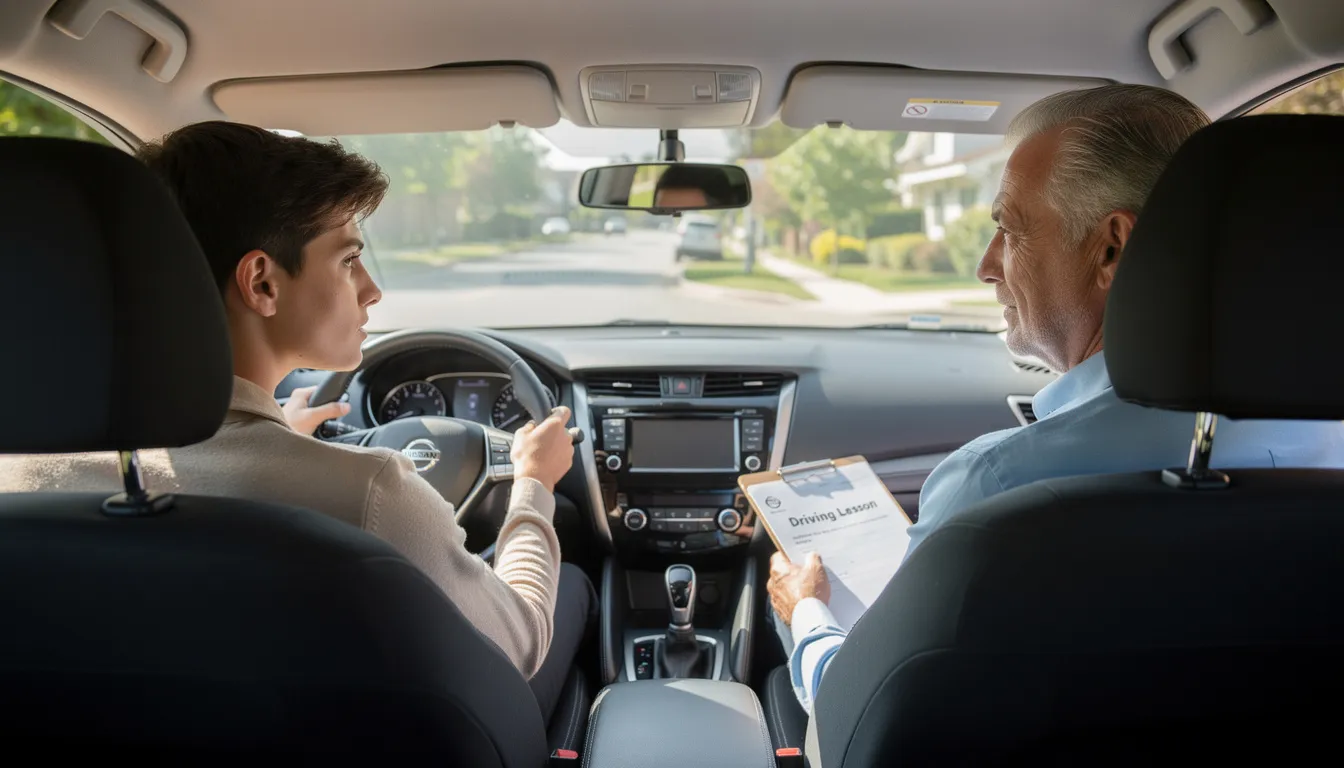
Level 1 License (Learner’s Permit): Available at age 14 years and 9 months after completing Segment 1 of driver education. You must pass the permit test and can only drive with a licensed adult at least 21 years old in the front passenger seat, ensuring compliance with safety and regulatory measures. Solo driving is not permitted, as this restriction helps ensure safety and provides a controlled environment to practice different driving scenarios.
Level 2 Intermediate License: Available at age 16 after holding Level 1 for at least six months and logging 50 hours of supervised driving (including 10 at night). You can drive unsupervised but face restrictions: no driving between 10 p.m. and 5 a.m. (with limited exceptions), and only one passenger under 21 who isn’t a family member. The driver’s license during this phase is designed to help improve both cognitive and motor skills behind the wheel.
Level 3 Full License: Available at age 17 after holding Level 2 for six months with no violations or crashes for 12 consecutive months. All GDL restrictions are removed, granting the freedom associated with a full driver’s license.
Adult TIP (18+): Adults 18 and older skip the GDL stages entirely. After passing the knowledge and vision tests, they receive a temporary instruction permit valid for 180 days, which then leads directly to a full standard driver’s license after passing the driving skills test. At this stage, developing motor skills is crucial to passing the practical aspect of the test.
Regarding license types, the difference between a standard driver’s license and an Enhanced Driver’s License (EDL) relates to border crossing privileges and proof of citizenship—not the permit test itself. The test content is identical for both. Additionally, applicants under 21 receive a vertical license marked “Under 21,” which automatically changes to a horizontal format when you renew after your 21st birthday.
Eligibility and Age Requirements for the Michigan Learner’s Permit
To begin the licensing process in Michigan, you must meet specific age and documentation requirements. The minimum age for a Level 1 License is 14 years and 9 months, and all applicants under 18 must complete Segment 1 of an approved driver education course before taking the permit test.
The basic eligibility requirements include being a Michigan resident, meeting the minimum age requirement for your license type, providing proof of legal presence in the U.S., and having a Social Security number (or proof of ineligibility). Teens must also present a certificate showing completion of Segment 1 driver education.
If you’re between 18 and 20, you’ll receive a vertical license with an “Under 21” designation. This doesn’t affect your driving privileges, but it does indicate your age status for purposes like alcohol purchase restrictions. After turning 21, you can visit any branch office to obtain a standard horizontal license.
Here’s a breakdown of requirements by age group:
Under 18: Must complete Segment 1 driver education, pass the permit test at an SOS office (not online), have parental consent, and progress through all three GDL levels
18-20: Can take the permit test online or in person, receive a vertical “Under 21” license, and proceed directly to a full license after passing the road test that evaluates motor coordination.
21 and older: Same process as 18-20, but receive a standard horizontal license immediately
Adults 18 and older are not required to complete driver education, though it’s often recommended for those without prior driving experience. However, every applicant, regardless of age, must pass the written knowledge test, a vision test, and a driving skills test to obtain a Michigan driver’s license.
For those seeking an Enhanced Driver’s License, you’ll need additional U.S. citizenship documentation, but this doesn’t change what’s covered on the permit test.
How to Apply for a Michigan Permit or TIP: Identity Requirements Explained
Every applicant must bring the appropriate identification documents to a Secretary of State office for the permit test to ensure they are prepared for this significant step toward earning a driver’s license.
You can pre-apply online through the Michigan Department of State website to save time at the branch. Preparing in advance can make your appointment more efficient, allowing you to focus on other tasks.
For applicants under 18:
Start by completing Segment 1 of an approved driver education course—this is mandatory before you can take the permit test. If you’re a manual learner, you might find it useful to explore a study manual to help you better understand the material. Next, gather all required documents proving your identity, Social Security number, legal presence, and Michigan residency. Schedule a visit to your local SOS branch office, as teens cannot take the test online. At the office, you’ll complete a vision test and the 50-question knowledge test. Upon passing both, you’ll receive your Level 1 License.
For applicants 18 and older:
Pre-apply online through the Michigan SOS website and gather your required documents. You can take the knowledge test online from home (available since July 2025) or in person at a branch office. Online test-takers must verify their identity via webcam throughout the exam and pay a $6.50 convenience fee in addition to standard fees. After passing, visit a branch office to complete your identity verification and receive your Temporary Instruction Permit. Bring all required paperwork to your appointment to keep the process smooth.
The TIP is valid for 180 days, and you must practice driving for at least 30 days before you’re eligible to take the driving skills test. If your TIP expires before you complete the road test, you’ll need to reapply and pay the fee again. Watch your learner’s progress to avoid delays.
The TIP costs about $25, with separate fees for third-party road test services. Always verify current amounts on the official Michigan Secretary of State website, as fees can change.
Before your visit, check branch wait times online, arrive early when possible, and if you’re a minor, bring a parent or legal guardian. Confirm whether your branch uses paper tests or computer-based testing so you know what to expect. Preparing these items can make your appointment smoother.
Documents You Need to Bring for Identity Verification
Michigan requires original documents—no photocopies or faxed copies—to prove four key factors: identity, legal presence, Social Security number, and Michigan residency. Missing even one document can waste your trip.
Identity: You need one document proving your identity. Acceptable examples include a valid U.S. passport, passport card, certified U.S. birth certificate, or a valid foreign passport with a U.S. visa.
Legal presence: This proves you’re legally authorized to be in the United States. For U.S. citizens, a birth certificate or passport works. Non-citizens need immigration documents such as a Permanent Resident Card or an Employment Authorization Document.
Social Security number: Bring your Social Security card or an official SSA letter showing your number. If you’re ineligible for a Social Security number, you’ll need documentation proving that status.
Michigan residency: You need documents showing your current Michigan address. Acceptable proof includes a utility bill, bank statement, pay stub, or official mail from a government agency dated within the last 90 days.
Some documents can satisfy more than one category—for example, a U.S. passport proves both identity and legal presence. However, SOS staff and branch managers have final approval authority, so bring backup documents when possible.
For special situations: non-U.S. citizens should bring all relevant immigration documents; recently released individuals may use MDOC identification; and homeless applicants can work with SOS staff using family member documents and proof of relationship. The department offers resources to help applicants in unique circumstances.
Before your visit, use the Michigan SOS online document checklist to confirm you have everything you need. This simple step can save you from multiple trips and frustration.
What’s on the Michigan Permit Practice Test? A Focus on Traffic Laws
The Michigan permit test evaluates your knowledge of the rules of the road, road signs, safe driving practices, and the consequences of violations, such as driving under the influence. Every question comes from the official driver’s handbook, so there are no surprises if you study the right material.
The test covers these main topic areas:
Traffic control devices and road signs: You’ll be tested on the meaning of regulatory signs (speed limits, stop signs, yield signs), warning signs (curves, intersections, hazards), and guide signs (route markers, destinations). Expect questions about sign shapes and colors.
Right-of-way rules: Questions cover who goes first at intersections, 4-way stops, roundabouts, and when yielding to pedestrians or emergency vehicles.
Speed limits and safe following distance: Know the default speed limits for different road types, school zones, and construction areas, plus how to calculate safe following distances.
Lane use and turns: Understand proper lane positioning, when to use turn signals, and how to execute left and right turns legally.
Sharing the road: Questions address safely passing bicyclists, motorcycles, and large trucks, as well as rules for school buses and emergency vehicles.
Alcohol and drug awareness: Expect questions about Michigan’s legal blood alcohol concentration (BAC) limits, DUI penalties, and implied consent laws. This is one of the most commonly failed topic areas.
Typical question topics include: 4-way stop procedures, school bus stopping laws, BAC limits for drivers under 21, construction zone speed rules, proper headlight use, and parking restrictions near fire hydrants.
All questions are multiple-choice with four answer options. While most have one clearly correct answer, some require careful reading—especially those involving specific distances, speeds, or time limits. There’s usually no strict time limit, but you must complete the test during a single SOS visit or online session.
How to Study for the Michigan Permit Test with Driver Education
Consistent, focused study beats last-minute cramming. Plan to start studying at least one to two weeks before your test date, spreading your review sessions across multiple days rather than trying to memorize everything at once.
Your primary resource should be the Michigan handbook “What Every Driver Must Know,” available for free on the Michigan SOS website. Pay special attention to chapters covering road signs, right-of-way rules, speed limits, and safe driving strategies—these topics appear most frequently on the exam.
Supplement your reading with online practice tests that mirror the actual 50-question format. Look for practice test options that provide instant feedback and explanations for wrong answers, as understanding why an answer is correct matters more than just memorizing facts.
Here’s a simple study plan that works:
Days 1-3: Read through the entire handbook once, highlighting key facts and numbers
Days 4-7: Take short 10-20 question quizzes daily, reviewing missed questions immediately
Days 8-10: Focus on your weakest topic areas based on quiz results
Day 11-12: Take two or three full 50-question practice tests, aiming for 85%+ scores
Day before test: Light review only—no cramming
Visual learners may benefit from educational videos covering Michigan-specific rules, animated sign charts, or flashcards to memorize key numbers such as fines, distances, and BAC limits. Many free resources are available on YouTube and on driving education websites.
If you’re retaking the test after a failed attempt, analyze which topic areas gave you the most trouble. Focus your studying specifically on those chapters in the driver’s handbook and take targeted practice quizzes on those subjects before scheduling your next attempt.
Taking the Permit Test: DMV In-Person and Online Options
Teens under 18 must take the permit test in person at a Secretary of State branch office—online testing is not available for minors. Adults 18 and older can choose to test in person or take the knowledge test online from home or another location.
In-person testing:
When you arrive at the SOS office, you’ll check in and present your documents for review. A staff member will conduct a vision test first—make sure to bring corrective lenses if you normally wear glasses or contacts, as failing the vision screening can delay your permit even if you’re prepared for the written test. After passing the vision check, you’ll be directed to a testing station to complete the 50-question knowledge test, typically on a computer.
Online testing (adults 18+ only):
Online testing requires identity verification via webcam, which monitors you throughout the exam. You can take the test up to two times per calendar day, and a $6.50 convenience fee applies each time. If you pass one section but fail another, you may visit a branch office to complete the remaining portion at no additional charge. The system strictly prevents cheating—any infractions can result in disqualification.
The SOS offers accommodations for test-takers who need them. Tests are available in multiple languages, and you can request a sign language interpreter at no cost through SOS Language Services. Accessibility options exist for people with disabilities—contact your local branch office in advance to arrange accommodations.
Scoring is provided immediately upon completion. If you pass, you’ll receive documentation confirming your eligibility for a Level 1 License (teens) or Temporary Instruction Permit (adults). Online test-takers must still visit a branch office afterward to verify their identity and receive their physical permit.
After You Pass: Level 1 License and TIP Rules
Congratulations on passing the permit test! However, this doesn’t mean you can drive alone yet. Your permit comes with specific restrictions designed to help you gain experience safely under supervision.
Level 1 License rules (teens under 18):
You must always drive with a licensed adult at least 21 years old seated in the front passenger seat. This person must be a parent, legal guardian, or designated licensed adult. No solo driving is permitted under any circumstances. You’re required to hold your Level 1 License for at least six months and complete a minimum of 50 hours of supervised driving, including 10 hours at night, before advancing to Level 2.
Temporary Instruction Permit rules (adults 18+):
Your TIP is valid for 180 days. During this time, you must always drive with a licensed adult in the front seat. You must complete at least 30 days of supervised practice driving before you’re eligible to schedule your road skills test.
To make the most of your supervised driving time, follow this practice driving approach:
Plan routes that include various road types: residential streets, highways, and urban areas
Vary conditions by practicing during the day and night, in light rain, and during different traffic levels
Focus on challenging maneuvers: parallel parking, three-point turns, lane changes, and highway merging
Gradually increase difficulty as your skills improve
Any violations, at-fault crashes, or repeated driving mistakes during your permit phase can delay your advancement to the next license level. For teens, maintaining a clean record is essential for progressing through the GDL system. New drivers of all ages are placed on a three-year probationary period after receiving their licenses, during which the Michigan Department of State closely monitors their driving records.
When You Don’t Pass: Scheduling an Appointment for Retaking the Michigan Permit Test
Don’t be discouraged if you don’t pass on your first attempt—you’re in good company. Testing data shows that approximately half of all test-takers fail their first try, with 27% scoring between 70% and 79% (just under the passing threshold).
If you fail, SOS staff will tell you how long you must wait before you can retake the test. This is typically the next business day, though specific rules may vary. You can take the test up to twice per calendar day for online testing (with fees each time).
Before leaving the testing area, ask which topic areas were most difficult. This information is invaluable for focused studying. Rather than re-reading the entire handbook, concentrate your efforts on the specific chapters where you struggled.
Here’s an improved study routine for retakers:
Break the driver’s handbook into individual chapters or sections
Read one section thoroughly, then immediately take a short quiz on that topic
Don’t move to the next section until you can score 90%+ on practice questions for the current one
Only take full-length practice tests after you’ve mastered each individual topic area
Track your scores over time to verify improvement
Keep in mind that some SOS branches charge a fee each time you take the knowledge test. Schedule your retake early in the day when you’re fresh and alert—testing while tired or rushed can hurt your performance.
A good rule of thumb: don’t schedule your real permit test until you’re consistently scoring 85-90% or higher on full-length practice tests. This buffer accounts for test anxiety and ensures you’re genuinely prepared.
FAQs: Michigan SOS and Permit Test Information
This section answers the most common questions about the Michigan permit test that new drivers search for online.
How many questions are on the Michigan permit test, and what’s the passing score? The standard permit test has 50 multiple-choice questions. You need to answer at least 40 correctly (80%) to pass.
At what age can I take the permit test in Michigan? Teens can take the test at 14 years and 9 months old after completing Segment 1 driver education. Adults 18+ can take the test anytime.
Can I take the Michigan permit test online? Adults 18 and older can take the knowledge test online with identity verification via webcam. Teens under 18 must test in person at a branch office.
How many times can I retake the permit test? There’s no limit on retakes, but you may need to wait until the next business day and pay applicable fees each time. Online testers can attempt twice per calendar day.
How long is my permit valid? A Level 1 License for teens is valid while progressing through GDL (typically until age 17-18). An adult TIP is valid for 180 days.
What’s the difference between the 50-question and 60-question test? The standard permit test is 50 questions. The 60-question format sometimes appears in practice materials or is used in specific DMV written test scenarios, but the official teen permit exam is 50 questions.
Do out-of-state permits transfer to Michigan? New Michigan residents may need to retake the knowledge test and/or road test depending on age and license status. If your previous license expired more than four years ago, you’ll need to complete the full testing process.
How long should I study for the permit test? Most new drivers should plan at least 5-10 focused study hours spread over one to two weeks. Consistent daily practice works better than cramming.
Always verify the latest rules, fees, and test formats on the official Michigan Secretary of State website at michigan.gov/sos, as policies can change from year to year. With proper preparation using the official handbook and quality practice test resources, you’ll be well-equipped to pass your Michigan permit test and begin your journey toward becoming a licensed driver.